.png)
Top 10 AI Marketing Strategies to Boost Personalization, Predictions and Chatbots
Updated: Jul 27
AI has moved from a marketing experiment to a practical tool for understanding customers, improving timing, and reducing repetitive work. The strongest uses are not flashy. They are focused: better product suggestions, faster support, sharper forecasts, smarter content testing, and customer journeys that feel less generic.
This list ranks the top ten AI marketing strategies by practical value, ease of adoption, and clear business impact. Each one includes a real-world example, the benefits, and the challenges marketing teams should plan for.
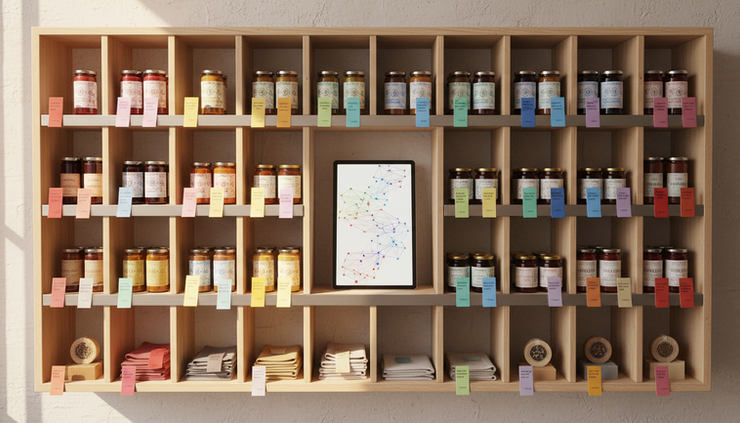
1. Personalize the customer experience across every touchpoint
Personalization is one of the clearest uses of AI in marketing. AI can analyze browsing behavior, purchase history, location, preferences, and engagement patterns to decide what a customer is most likely to want next.
Netflix is one of the best-known examples. Its recommendation system shapes what viewers see on the home screen, from suggested titles to category rows. Amazon also uses recommendation models to suggest products based on behavior from similar shoppers and past purchases.
For marketers, this can show up as:
Product recommendations on ecommerce pages
Personalized email content
Tailored app experiences
Custom landing page modules
Loyalty offers based on customer habits
Benefits
Personalization can raise engagement, improve conversion rates, and make customers feel understood. It also helps brands avoid sending the same offer to everyone.
Challenges
Poor data quality can create awkward or irrelevant recommendations. Privacy rules also matter. Customers should know how their data is used, and teams need clear consent practices.
2. Use predictive analytics to forecast customer behavior
Predictive analytics uses past behavior to estimate what may happen next. It can help marketing teams identify which customers are likely to buy, churn, upgrade, or respond to a campaign.
Starbucks has used AI through its Deep Brew platform to support personalization, store operations, and customer recommendations. In marketing, the same type of predictive modeling can guide offer timing and product suggestions based on past preferences.
A subscription company, for example, can use predictive models to spot customers who may cancel soon. Instead of waiting for churn, the team can send helpful content, a better plan option, or a support prompt.
Benefits
Predictive analytics helps teams spend budget where it is most likely to matter. It also improves retention because teams can act before a customer leaves.
Challenges
Models can become stale if customer behavior changes. Seasonal shifts, economic pressure, or new competitors can weaken old assumptions. Teams need to review model performance often.
3. Deploy chatbots for faster customer support and sales help
AI chatbots can answer common questions, recommend products, book appointments, and route complex issues to human agents. The best chatbots do not pretend to replace people. They handle simple tasks quickly and create a smoother handoff when needed.
Sephora has used conversational tools to help customers find products, book services, and get beauty guidance. Many airlines, banks, and retailers also use virtual assistants to answer routine questions such as order status, store hours, and account details.
A strong chatbot can support marketing by:
Capturing lead information
Qualifying prospects
Suggesting products
Answering common objections
Recovering abandoned carts
Benefits
Chatbots can reduce wait times and support customers outside normal business hours. They also collect useful question patterns that can improve content, product pages, and sales training.
Challenges
A bad chatbot damages trust quickly. If it gives wrong answers or traps users in loops, customers get frustrated. Clear escalation to a human agent is essential.

4. Create smarter audience segments that update over time
Traditional segmentation often relies on static categories, such as age, location, or purchase frequency. AI can create dynamic segments based on behavior and intent.
For example, Spotify groups listeners by music behavior, mood patterns, and listening habits. Its consumer experiences, such as personalized playlists and year-end listening summaries, show how behavior-based segmentation can feel highly relevant.
Retail brands can use similar logic. Instead of one group called “frequent buyers,” AI might identify customers who buy gifts, customers who respond to bundles, and customers who often browse but wait for price drops.
Benefits
Dynamic segmentation lets teams speak to real behavior rather than broad assumptions. It can improve email, SMS, paid media audiences, and loyalty programs.
Challenges
Segments can become too complex. If no one can explain why a group exists or how to use it, the model loses business value. Marketing teams need clear naming and simple activation rules.
5. Improve content planning with AI-driven topic and intent analysis
AI can analyze search patterns, customer questions, reviews, sales calls, and support tickets to find content opportunities. This helps teams create content that answers real needs instead of relying only on brainstorming.
HubSpot, Salesforce, and many content platforms now include AI features that suggest topics, summarize customer themes, and help plan content calendars. The real value comes when marketers combine these suggestions with subject matter expertise.
A software company might analyze support requests and discover that buyers keep asking about setup time. That insight can lead to a comparison page, a setup checklist, a short video, and better sales enablement material.
Benefits
AI can speed up research and reveal repeated questions hidden across many channels. It helps content teams prioritize topics that support the customer journey.
Challenges
AI-generated content can become generic if teams publish without editing. Accuracy, originality, and brand fit still need human review.
6. Use AI to test and improve offers, emails, and landing pages
AI can help test subject lines, send times, page layouts, calls to action, and product offers. Instead of waiting weeks for manual A/B tests, machine learning systems can shift traffic toward better-performing variations sooner.
Booking and travel platforms are known for frequent testing across product pages, messages, and booking flows. Ecommerce brands also use AI testing tools to adjust product page elements based on conversion behavior.
Practical uses include:
Choosing email send times by user behavior
Testing product recommendation blocks
Ranking landing page sections
Matching offers to customer intent
Adjusting cart recovery messages
Benefits
Testing helps teams improve performance with evidence rather than opinion. AI can also handle more variation than a manual test plan.
Challenges
Too much testing can create a fragmented customer experience. Teams also need enough traffic for results to be meaningful. Small sample sizes can mislead even a well-built system.

7. Predict customer lifetime value to guide budget decisions
Customer lifetime value, often called CLV, estimates what a customer may be worth over time. AI can improve these estimates by using purchase frequency, average order value, returns, engagement, and retention signals.
Retailers and subscription services use CLV models to decide which customers deserve higher acquisition costs, special retention efforts, or loyalty outreach. For example, a meal kit company might treat a customer who orders weekly very differently from someone who bought a one-time gift box.
Benefits
CLV modeling helps marketers avoid treating every conversion as equal. It supports smarter budget allocation, better loyalty programs, and more relevant retention campaigns.
Challenges
CLV is only as good as the data behind it. If returns, discounts, service costs, or churn are missing, the model may overvalue certain customers. Finance and marketing teams should agree on the inputs.
8. Build AI-powered product recommendations and bundles
Product recommendations go beyond “people also bought.” AI can study how products are used together, which items lead to repeat purchases, and which combinations fit different customer needs.
Stitch Fix is a useful case study. The company combines data science with human stylists to recommend clothing. Algorithms help narrow choices, while human judgment adds taste, context, and nuance.
Ecommerce brands can apply this idea in product bundles, replenishment reminders, and cross-sell paths. A pet supply store, for example, might recommend food, treats, grooming items, and subscription timing based on pet age and prior orders.
Benefits
Better recommendations raise average order value and reduce choice overload. They also help customers discover products they might have missed.
Challenges
Recommendations can become repetitive if the system only promotes bestsellers. Teams should balance revenue goals with variety, availability, and customer satisfaction.
9. Use sentiment analysis to understand customer feedback at scale
Customers leave signals everywhere: product reviews, support chats, surveys, call transcripts, app feedback, and community comments. AI sentiment analysis can group this feedback by emotion, topic, and urgency.
Consumer brands often use these tools to monitor product launches and service issues. For example, a restaurant chain could analyze review text to find repeated complaints about pickup wait times, menu confusion, or packaging quality.
This is not limited to reputation tracking. Sentiment data can shape campaigns, product messaging, and customer support priorities.
Benefits
Sentiment analysis can detect patterns much faster than manual review. It gives marketing, product, and service teams a shared view of customer pain points.
Challenges
AI can misunderstand sarcasm, slang, regional phrasing, or mixed feedback. A review that says, “Great product, but shipping was a mess,” needs more nuance than a simple positive or negative label.
10. Automate journey orchestration while keeping human oversight
Journey orchestration means deciding what message, offer, or experience a customer should receive next. AI can use real-time behavior to guide these decisions across email, SMS, apps, websites, and support channels.
Disney, for example, has used data and digital tools across its parks and apps to improve guest experiences, recommendations, and trip planning. The broader lesson applies across industries: when customer signals connect across touchpoints, the experience feels more useful.
A bank might send education content after a user explores mortgage calculators. A retailer might pause promotional emails after a customer opens a support ticket. A fitness app might adjust onboarding based on activity level.
Benefits
Journey orchestration reduces irrelevant messaging. It helps customers move through complex decisions with better timing and fewer repeated prompts.
Challenges
Automation can feel invasive if it reacts too aggressively. Teams need frequency limits, preference controls, and clear rules for sensitive topics.

How to bring AI into marketing without creating chaos
The best AI programs begin with a business problem, not a tool search. A team that wants to reduce churn needs different data and workflows than a team trying to improve product discovery.
Start with one focused use case. Pick an area where the team already has data, a clear metric, and a process that can change based on the result. Chatbots, recommendations, and churn prediction are often good starting points because the value is easy to see.
A practical rollout should include:
A clear owner for the AI use case
Defined success metrics
Clean data sources
Human review points
Privacy and consent checks
A plan for testing and updates
AI also changes team skills. Marketers do not need to become data scientists, but they should understand model limits, data quality, bias risk, and how to question AI outputs. Human judgment remains central, especially for brand voice, customer empathy, and ethical decisions.
The top pick for most marketing teams
For most organizations, the strongest starting point is personalized customer experiences powered by predictive analytics. This pairing creates visible value across email, ecommerce, loyalty, support, and sales. It also builds the foundation for more advanced work, including journey orchestration and product recommendations.
Chatbots are a close second, especially for brands with high support volume or long buying journeys. They can improve response times quickly, but only when they solve real customer problems and hand off smoothly to humans.
AI works best when it makes marketing more relevant, not just more automated. Start small, measure honestly, and build systems that respect customer trust. The brands that win with AI will be the ones that pair strong data with clear strategy and human care.




Comments